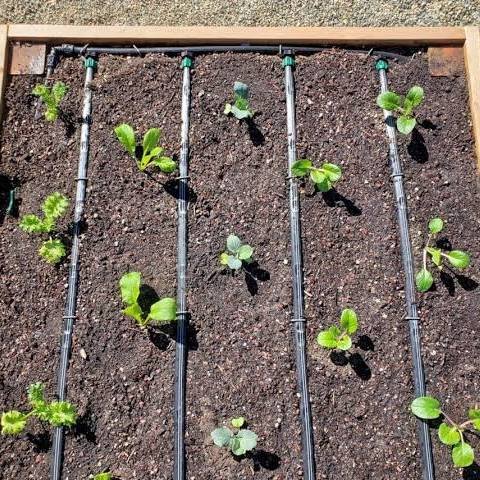
Flowers in raised beds often grow vigorously because the soil warms quickly and drainage is usually better than in compacted ground. However, the same conditions can cause the bed to dry out faster, particularly during hot, windy weather. Effective care depends on checking the soil instead of following a rigid daily schedule. Insert a finger several centimetres into the soil; water when the root zone is beginning to dry, not only when the surface looks dusty.
Water deeply and consistently

Apply water slowly at the base of the plants so it reaches the full root zone. Early morning is generally preferable because foliage has time to dry and less water is lost to evaporation. Drip irrigation or a soaker hose can provide an even supply and reduce wet foliage. Newly planted flowers require closer monitoring until their roots establish, while mature, drought-tolerant species may need less frequent watering.
Feed according to plant needs

Use compost as a long-term soil amendment and apply a balanced flower fertiliser only when growth or soil conditions justify it. Follow the product label and avoid overfeeding, which can encourage weak stems, excessive foliage, and nutrient runoff. Deadhead spent blooms where appropriate to redirect energy and extend flowering.