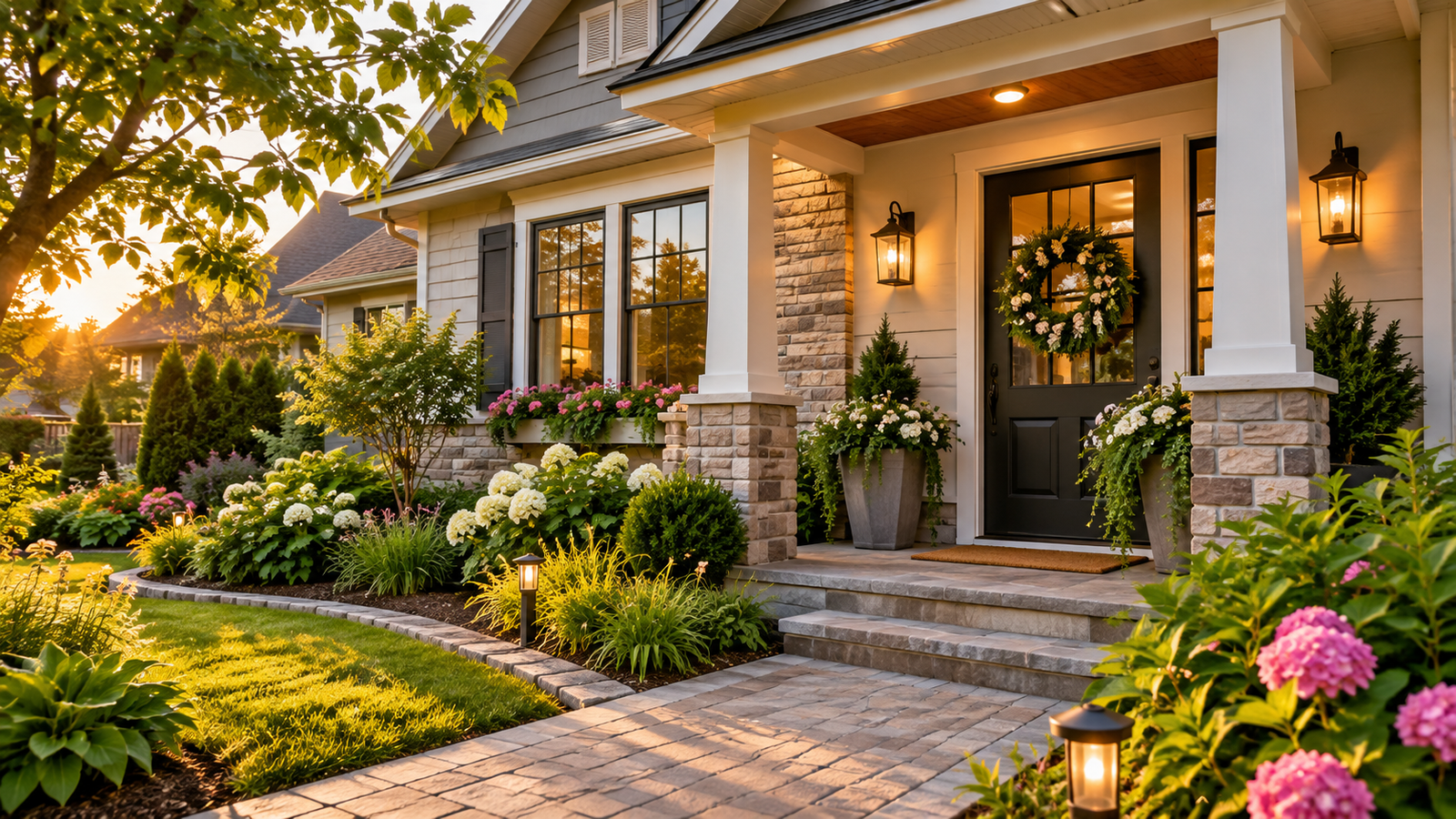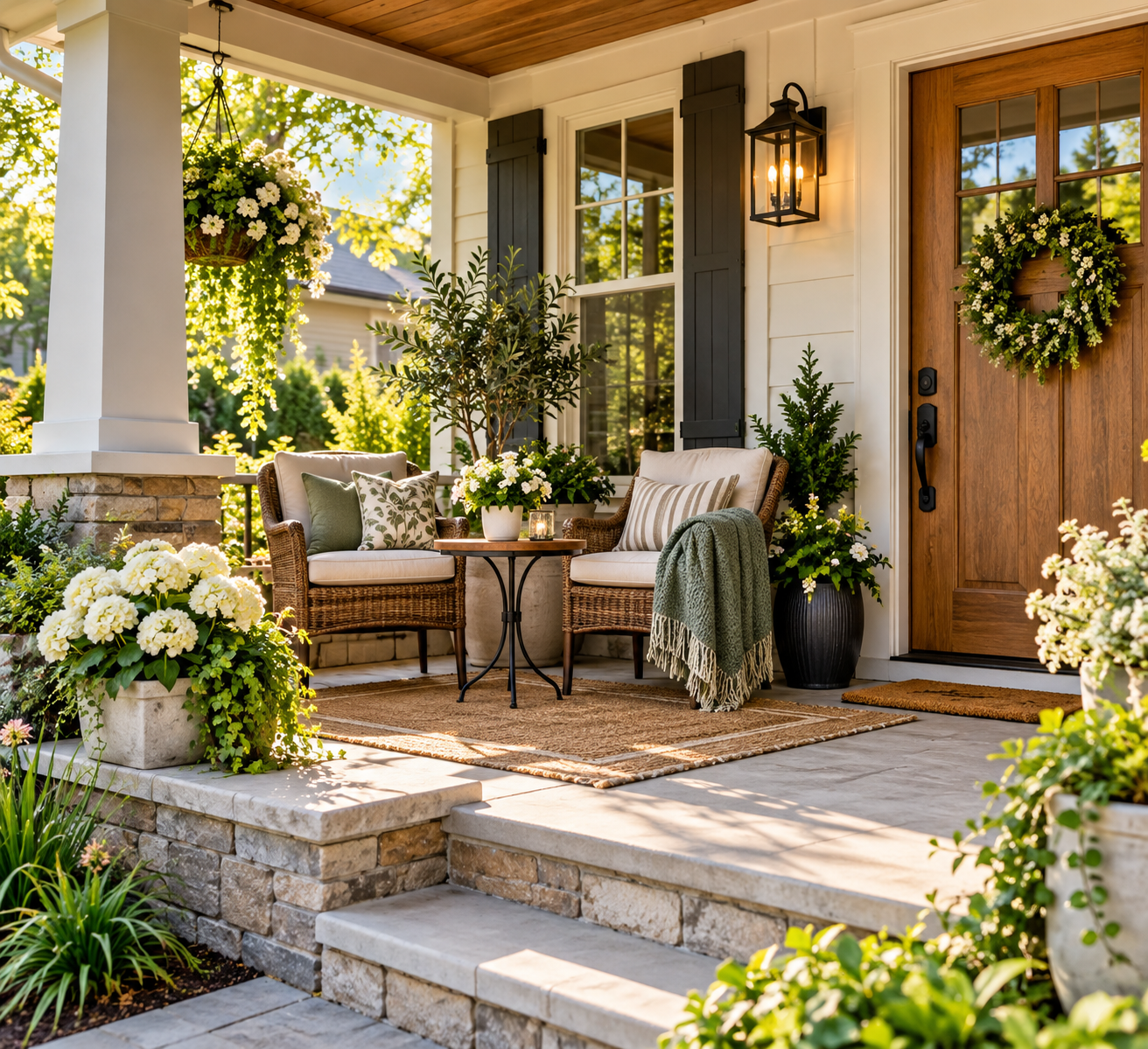
A low-maintenance front garden can look attractive while reducing repetitive work. The key is not to eliminate plants, but to choose the right plants and organize them according to light, soil, water, and mature size. Good preparation often saves more time than constant correction later.
Start with the site
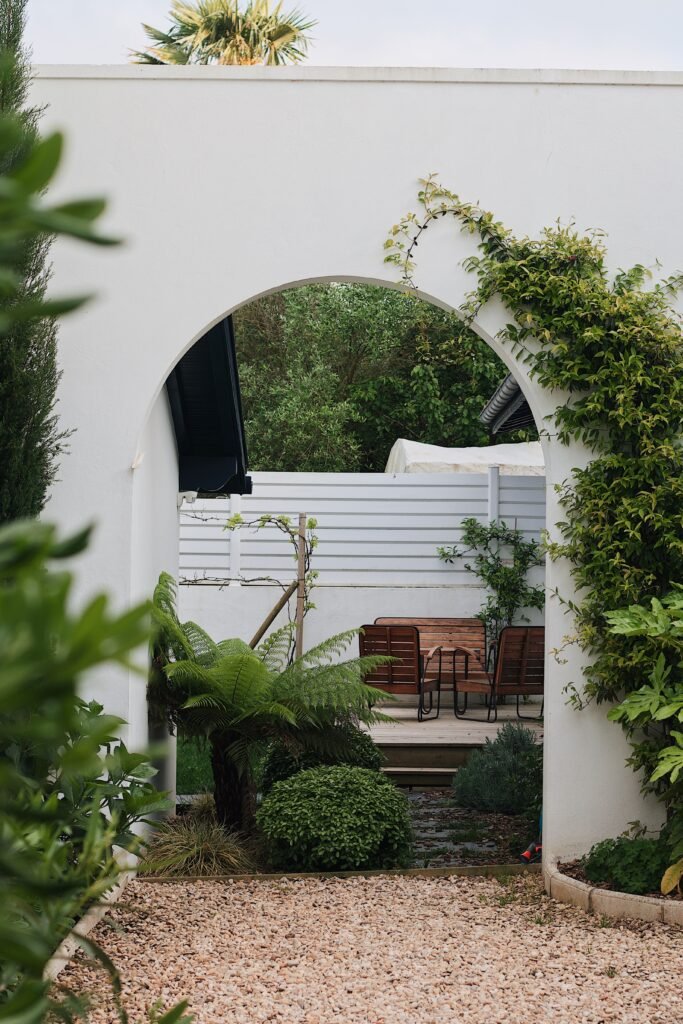
Observe where sunlight falls, identify wet or dry areas, and test the soil if needed. Note existing trees, drainage routes, utilities, and views from the street. Avoid planting directly against walls or blocking access to meters and vents.
Choose reliable plants
Select climate-suitable perennials, shrubs, ornamental grasses, and ground covers that match the conditions. Native plants may be useful because they are adapted to local weather and wildlife, but every plant still needs the correct location. Check the mature height and width before purchasing.
Group plants by care needs
Place plants with similar watering and light requirements together. This prevents overwatering some plants while others remain dry. A simple repetition of three or four plant types can look intentional and is easier to manage than a collection of unrelated specimens.
Reduce weeds and watering
Prepare the soil properly, remove persistent weeds, and apply a suitable layer of mulch without piling it against stems or trunks. Drip irrigation or soaker hoses may deliver water efficiently where appropriate. Check the system regularly and adjust watering after rainfall.
Maintain the structure

Prune at the correct season, remove damaged growth, refresh edging, and keep paths visible. Leave enough space for plants to reach their mature size, because overcrowding creates extra trimming and disease problems. A well-planned garden remains attractive because it is easy to care for, not because it is maintenance-free.