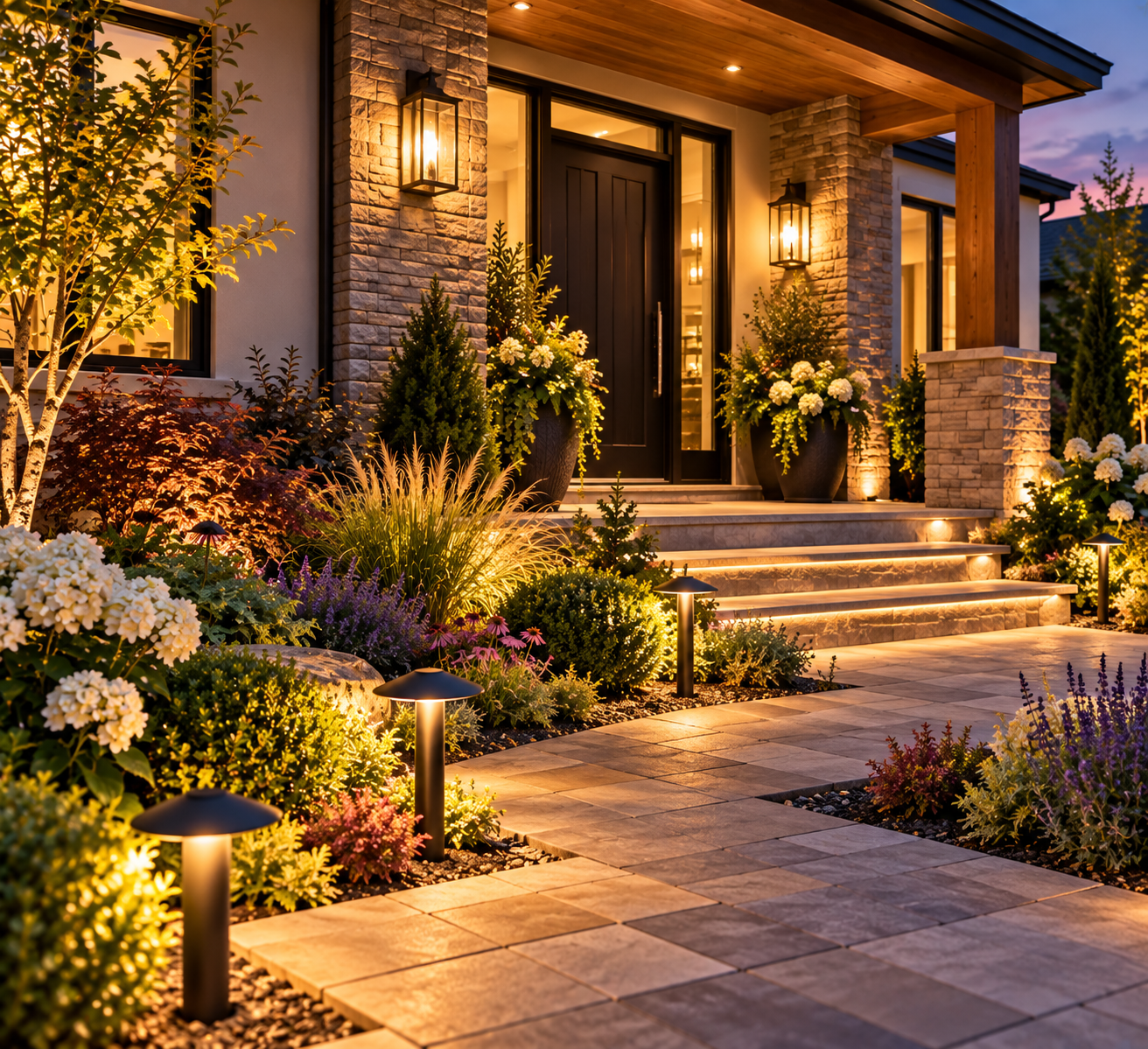
The facade and terrace look most successful when they are designed as parts of one outdoor composition. Repeating materials, colors, and plant forms can create a natural transition from the building to the garden.
Repeat key materials
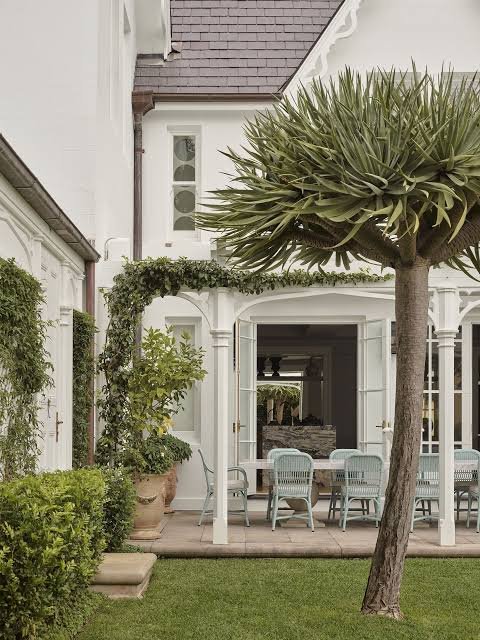
Use a subtle connection between facade finishes, terrace flooring, edging, or planters. The materials do not need to match exactly, but their tones and textures should work together.
Coordinate the planting
Choose plants that complement the scale and color of the house. Repeat selected shrubs, grasses, or container plants near both the facade and terrace to create continuity.
Plan the view from inside
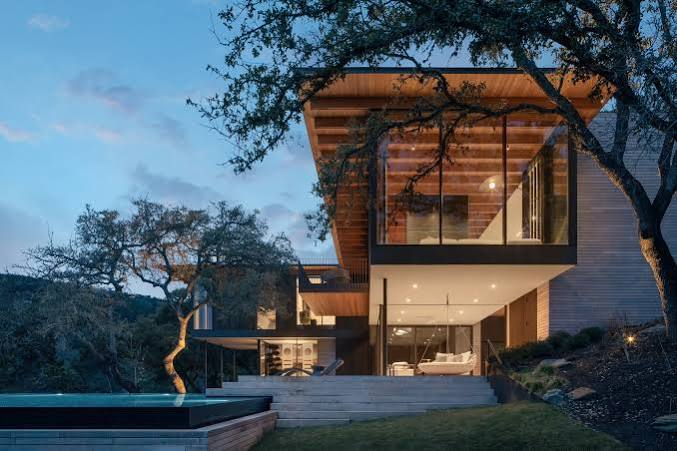
Consider what is visible through windows and doors. A focal plant, attractive seating area, or well-lit terrace can improve the view from the interior as well as from the street.
Balance privacy and openness
Screens, hedges, trellises, and trees can provide privacy, but they should not make the entrance feel hidden or block useful light. Leave space for mature growth.
Maintain the transition
Keep drains, paths, doors, and ventilation points accessible. Regular cleaning, pruning, and surface care will preserve the connection between the facade and terrace.
A coordinated transition makes the home feel more spacious, welcoming, and connected to its surroundings.